
Jacques Leduc
Jacques Leduc (born November 25, 1941) is a Canadian film director and cinematographer.
Leduc began his career in 1961 working as a film critic for the magazine Objectif. The following year, at the age of 21, he was hired as a camera assistant by the NFB. Over the course of the next few years he worked under such filmmakers as Denys Arcand, Gilles Carle, and Don Owen. In 1965 he began working as both Director and Cinematographer; his first film as director was a documentary short entitled Chantal en vrac. Leduc continued his work as Director with his first feature film in 1967 entitled Nomininque, depuis qu'il existe and his first feature documentary film in 1969 entitled Cap d'espoir. The documentary film was "about the muted violence that existed [in Quebec] and the monopoly over news held by Power Corp." and became one of the most famous cases of censorship at the NFB when it was banned by NFB commissioner Hugo McPherson.
Leduc continued working on critically acclaimed films throughout the 70s and 80s such as On est loin du soleil (1970), Tendresse ordinaire (1973), and Trois pommes à côté du sommeil (1988). In 1990 he left the NFB and became a freelance filmmaker.[3] In 1992 he directed the film La vie fantôme; the film was named Best Canadian Film at the Montreal World Film Festival and earned a Genie Award for Best Screenplay nomination. Since then he has primarily worked with other Directors as their cinematographer and in 2008 was awarded the Prix Albert-Tessier.
| Known For | Directing |
|---|---|
| Most Rating | 0.3519 |
| Birthday | 1941-11-25 |
| Place of Birth | Montreal, Quebec, Canada |
| Also Known As |
1973
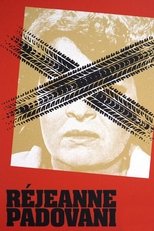
Réjeanne Padovani
6.7/10
The unexpected return of his ex-wife and the assembly of a group of protesters both threaten to wreck a corrupt contractor's inauguration party for hi...
Watch Now
Réjeanne Padovani

1972
La tête au neutre
0/0
Watch Now
La tête au neutre

1985
Cinéma, cinéma
7/1
An anthology of sequences from the best films that the National Film Board of Canada produced since its beginnings. Divided by themes and presented by...
Watch Now
Cinéma, cinéma

2001
My Eye for a Camera
0/0
A filmmaker, fascinated by the power of the camera and obsessed with the theories of Russian film pioneer Dziga Vertov, decides to get a camera eye to...
Watch Now
My Eye for a Camera

2011
The Private Life of Cinema
0/0
A two-part in-depth exploration of the evolution of the private film industry, seen through the eyes of more than 50 industry professionals. Part One...
Watch Now